The Corporate Sustainability Reporting Directive (CSRD) is one of the most ambitious regulations introduced by the European Union to increase transparency and accountability for sustainable development. It builds upon the Non-Financial Reporting Directive (NFRD) but significantly expands its scope and level of detail.
CSRD requires detailed reporting on environment, social, and governance (ESG) matters, providing a standardized approach to measuring and reporting performance. Its main objectives are:
Transparency: Ensuring that companies disclose comparable, reliable, and verifiable information about sustainability.
Accountability: Encouraging companies to integrate sustainable practices into their operations.
Alignment: Supporting the EU's broader goals under the European Green Deal, particularly the objective of achieving climate neutrality by 2050.
The phased implementation began in 2024, when CSRD extended its coverage to approximately 50,000 companies compared to 11,000 previously covered under NFRD. This directive marks a pivotal moment in the journey toward a sustainable economy, making sustainability reporting as essential as financial reporting.
2. Who Does CSRD Affect?
CSRD covers a wide spectrum of companies within the EU and beyond. Its scope is defined by specific thresholds, and its impact will grow over time.
Primary Thresholds
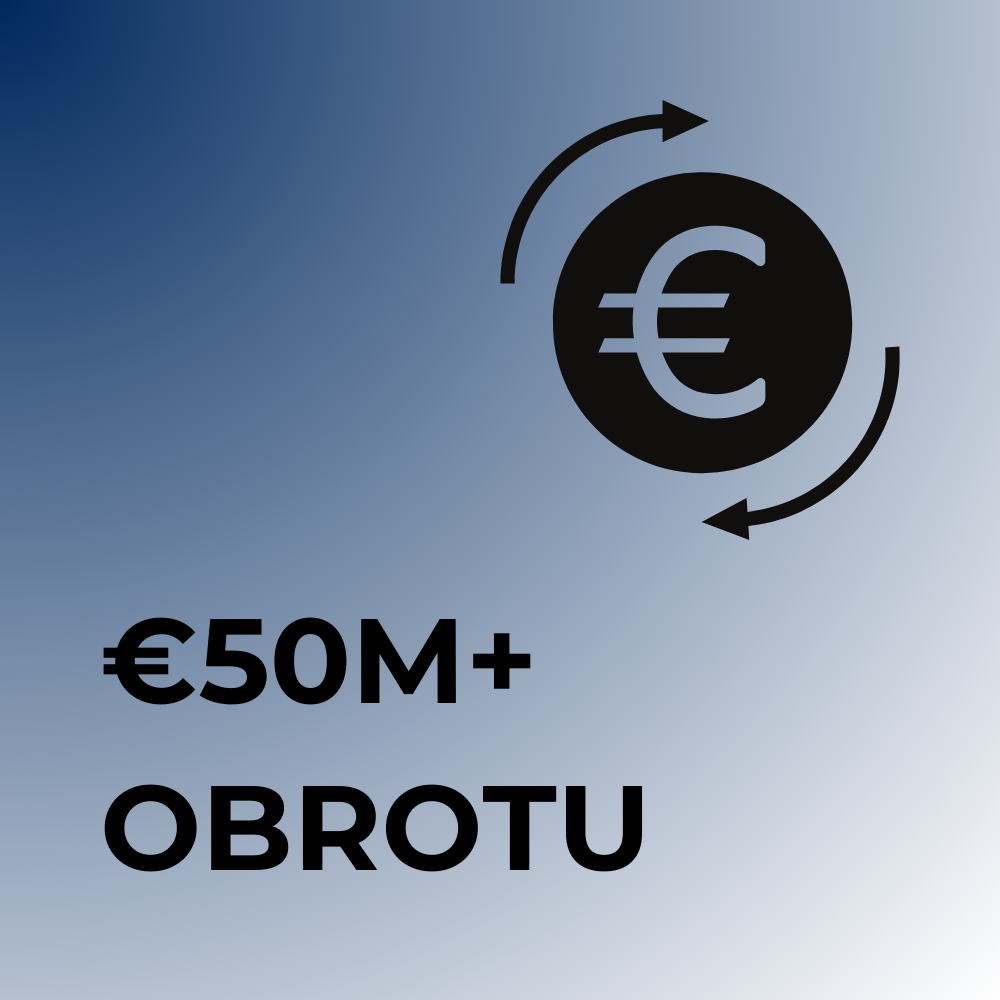
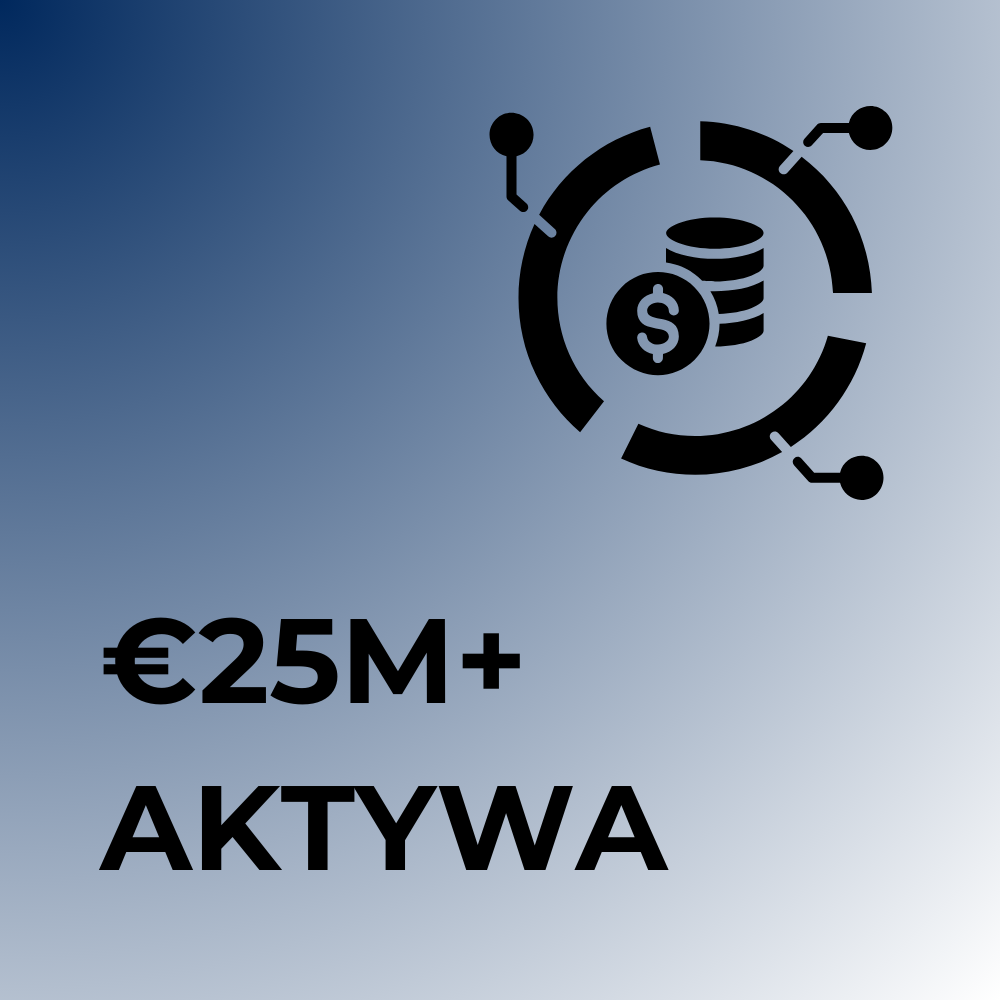
CSRD applies to companies that meet at least two of the following criteria:
Phased Implementation
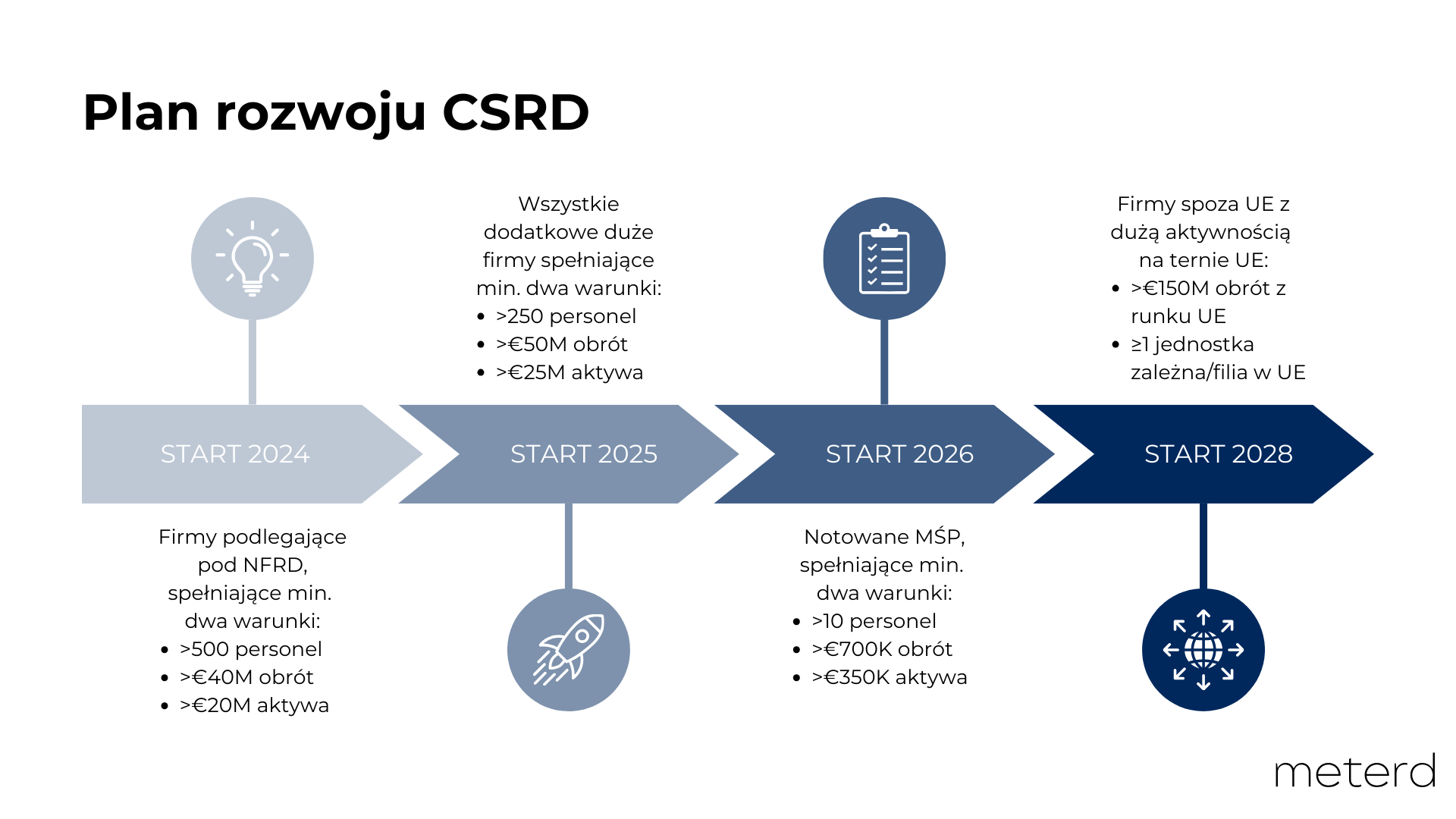
CSRD requirements will affect different types of companies in stages:
2024: Large listed companies already reporting under NFRD (>500 employees, >€40M revenue, >€20M assets)
2025: Large unlisted companies meeting the above criteria
2028: Non-EU companies generating EU revenues exceeding 150 million euros annually
CSRD Implementation Timeline
Important Supply Chain Implications
While smaller companies may not be directly subject to CSRD regulations, many will need to comply indirectly through their relationships with larger companies. This is particularly relevant for Scope 3 emissions reporting, which requires data from suppliers and partners in the company's value chain.
3. Key Challenges and Opportunities Under CSRD
Challenges
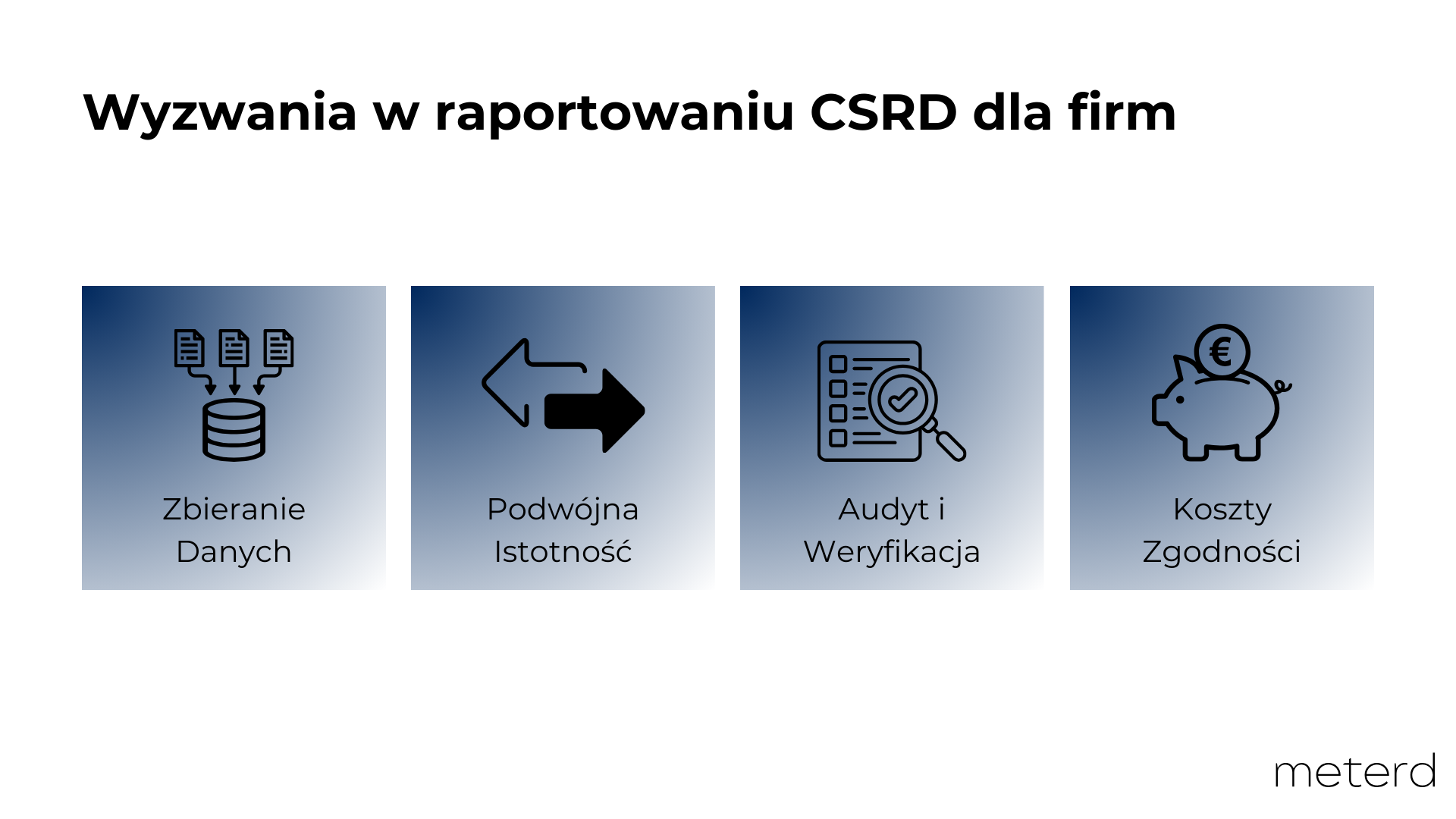
Data Collection: Companies must collect detailed and accurate data across all areas of their operations and supply chains.
Double Materiality Analysis: Companies must address both how their activities impact sustainability and how sustainability issues affect their business.
Audit and Verification: Mandatory independent verification of reports complicates the process and increases requirements.
Compliance Costs: Significant investments in systems, technology, and personnel will be necessary to ensure compliance with the directive.
CSRD Reporting Challenges
Opportunities
Operational Optimization: CSRD compliance encourages companies to identify inefficiencies and adopt resource optimization strategies. Example: A manufacturing company identifies excessive energy consumption during compliance reviews and reduces costs by 20% by implementing renewable energy solutions.
Increased Market Trust: Transparent ESG reporting fosters trust among investors, customers, and regulators.
Innovation and Leadership: Early adoption of the directive can position companies as sustainability leaders in their industries.
4. CSRD Reporting Fundamentals and ESRS Area Breakdown
4.1 Core CSRD Reporting Principles
Double Materiality Analysis: Companies must disclose both their external impact on the environment and society and internal risks arising from sustainability issues.
Independent Verification: Reports must be verified by external auditors.
Standardized Framework: Reports must comply with European Sustainability Reporting Standards (ESRS).
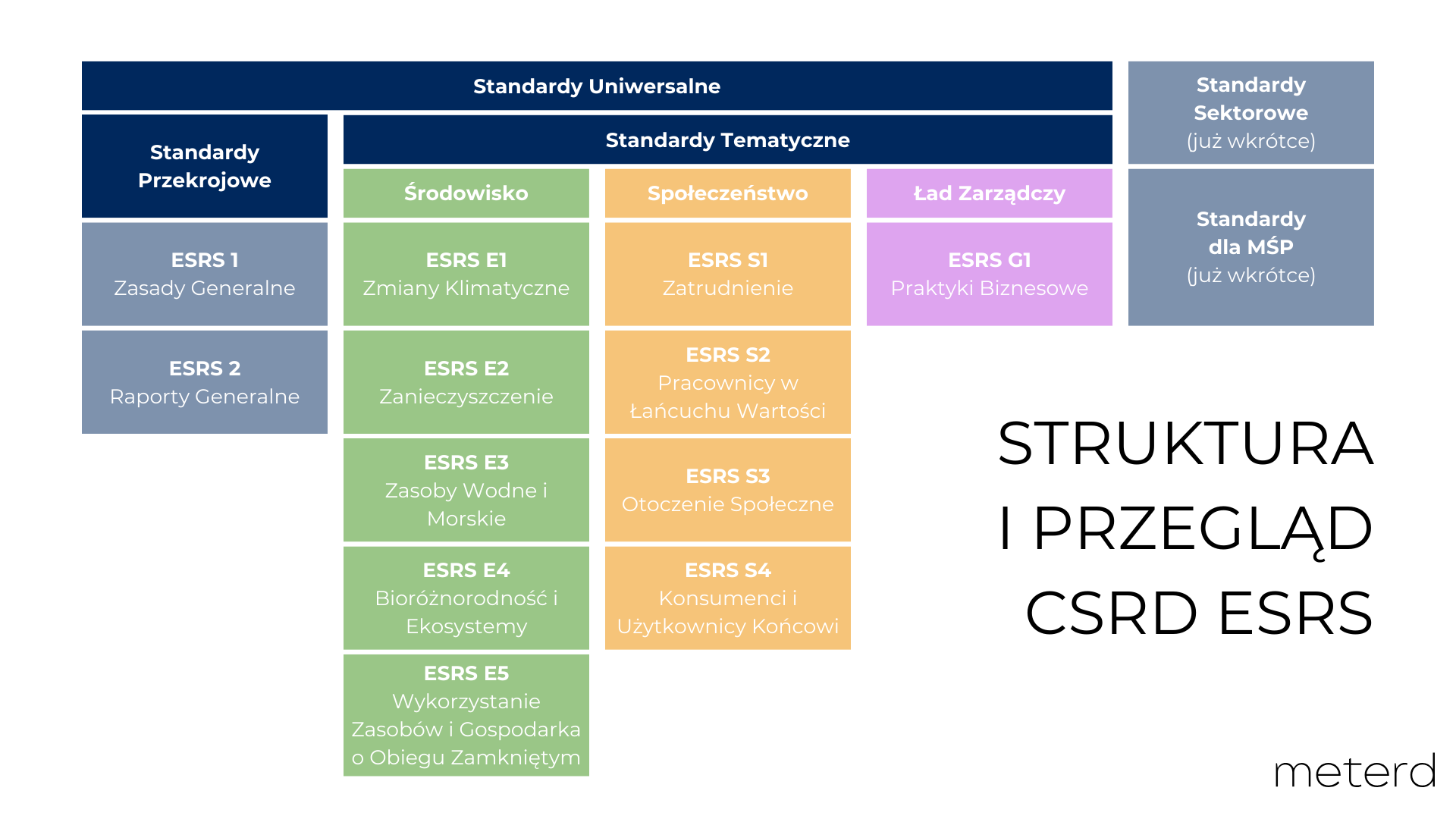
4.2 ESRS Area Breakdown
Environment (ESRS E):
E1 - Climate Change: Disclosed information includes Scope 1 (direct), Scope 2 (indirect energy), and Scope 3 (value chain) emissions. Example: A logistics company reports emissions from delivery vehicles and energy used to operate warehouses.
E2 - Pollution: Reduction of pollutants such as CO2, NOx, and particulate matter (PM 2.5, PM 10). Example: Reporting air and water pollution from manufacturing facilities.
E3 - Water and Marine Resources: Disclosure of water consumption, discharge, and recycling. Example: A beverage manufacturer calculates water consumption per liter of product.
E4 - Biodiversity and Ecosystems: Reports on the impact of land use and resource extraction on biodiversity. Example: A mining company assesses the ecological impacts of its operations.
E5 - Resource Use and Circular Economy: Metrics regarding waste reduction, recycling, and product lifecycle impact.
Social (ESRS S):
S1 - Employment: Employee diversity, health and safety metrics for the workforce in the workplace. Example: Reporting the number and types of workplace accidents in a manufacturing facility.
S2 - Workers in the Value Chain: Reporting working conditions in supplier facilities. Example: Monitoring labor practices in supplier factories.
S3 - Affected Communities: Disclosure of the company's operational impact on local communities. Example: A construction project reports on community engagement and relocation assistance.
S4 - Consumers and End Users: Reporting practices regarding product safety and ethical marketing.
Governance (ESRS G):
G1 - Business Practices: Metrics regarding anti-corruption, ethical practices, and governance structure.
ESRS Standards Structure
5. How Meterd's Offering Helps with CSRD Directive Challenges
Meterd is a modern, intelligent utility management platform designed to optimize corporate buildings and streamline sustainability reporting. By combining advanced IoT technology, real-time data analytics, and sustainability consulting, Meterd provides a comprehensive solution for companies reporting under CSRD standards.
What Does the Meterd Platform Include?
Seamless Data Collection from Multiple Facilities: Our IoT sensors collect accurate data on energy consumption, water usage, air quality, and other metrics directly from company buildings, all in real-time. This provides a reliable foundation for reporting Scope 1, 2, and 3 emissions under ESRS E1.
Automated Analysis and Reporting: The platform automates data collection and analysis, tailoring outputs to CSRD requirements. This eliminates tedious manual processes, unwanted errors, and significantly saves time for reporting teams.
ESG Metrics Monitoring: Meterd offers clients customized dashboards that track ESG metrics in real-time. Facility managers and executives can monitor progress on compliance and optimization projects.
Sustainability Consulting: We combine our data analysis expertise with consulting services to advise clients on short-term optimizations (e.g., HVAC system adjustments) and long-term investments (e.g., renewable energy solutions).
Flexible Integration: The platform seamlessly integrates with existing building management systems (BMS) and adapts to accommodate future initiatives and projects, ensuring system scalability and modularity.
Compliance Consulting: The Meterd system facilitates CSRD compliance by helping clients not only collect necessary data but also structure and interpret it.
Meterd System in Action
Case Study 1: Manufacturing Facility in Germany
Challenge: A large industrial facility in Germany struggled to collect CO2 emissions data to ensure compliance with the CSRD directive. Their manual processes were time-consuming and error-prone, particularly when tracking Scope 1 and 2 emissions.
Solution Provided by Meterd: Smart IoT meters were installed to measure energy consumption at the device level, IoT gateways were integrated to consolidate data from production lines and HVAC systems, and an automated dashboard provides facility managers with insights into the performance of all buildings and processes.
Results: Annual energy costs reduced by over 100,000 euros, compliance with ESRS E1 and ESRS E5, increased reporting accuracy enhancing investor confidence.
Case Study 2: Polish Hotel and Conference Center
Challenge: A hotel chain in Poland encountered difficulties monitoring water and energy consumption at its facilities, which is crucial for ESRS E3 (Water Resources) and ESRS E1 (Climate Change). Additionally, the hotel did not actively monitor air quality in its buildings.
Solution Provided by Meterd: Water flow sensors, energy meters, and air quality monitors were installed. An energy consumption optimization plan was provided focusing on heat pump efficiency and solar water heating.
Results: Water consumption reduced by 30% and energy costs by 25%, ESRS compliance ensured, strengthened hotel reputation as a sustainable institution.
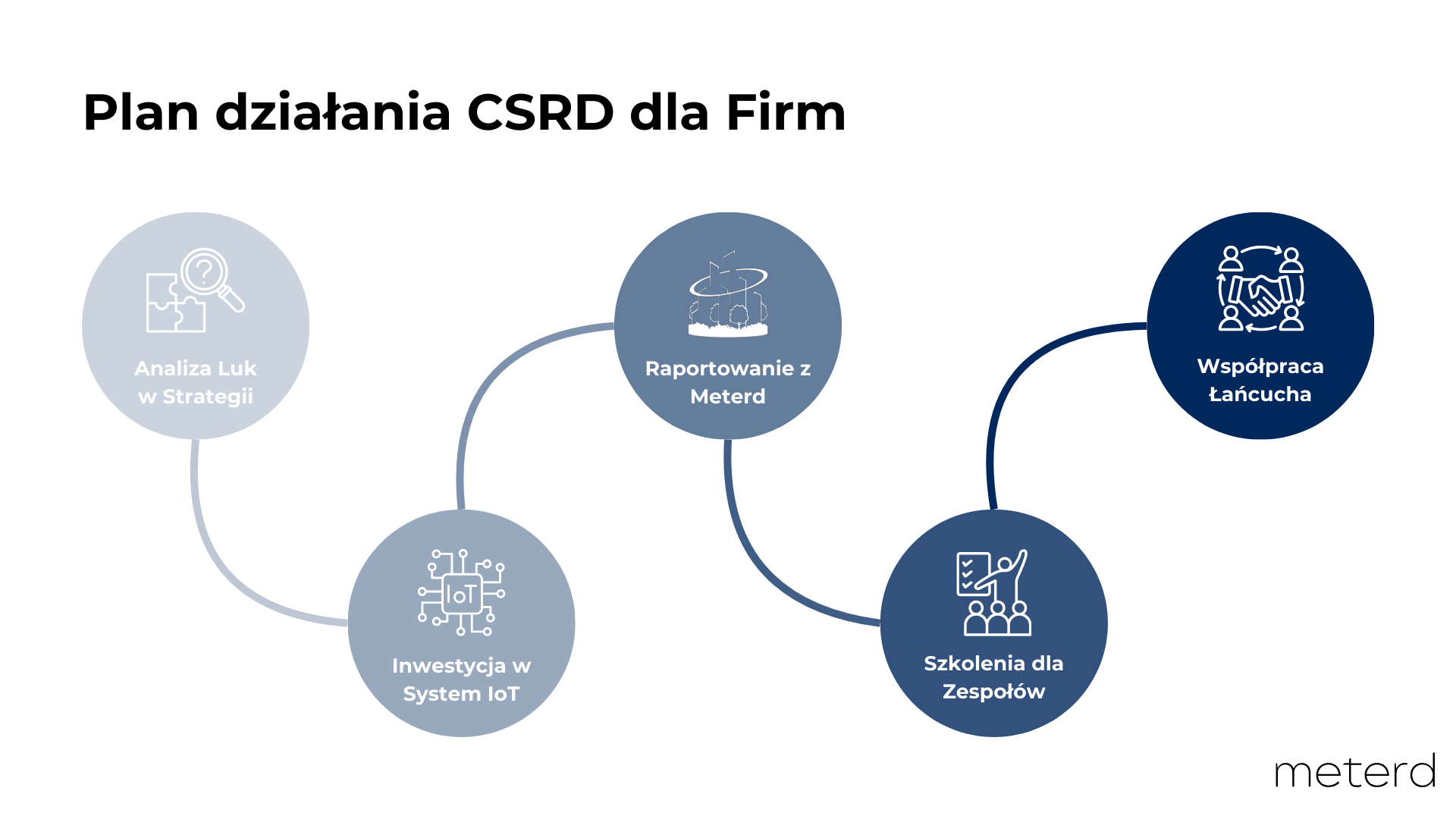
6. Practical Steps to Ensure CSRD Compliance
Conduct a strategic sustainability gap analysis
Invest in IoT systems for precise data collection
Use the Meterd platform to streamline the reporting process
Train teams on ESG metrics and double materiality analysis
Collaborate with partners in your supply chain to obtain Scope 3 emissions data
CSRD Action Plan for Companies
7. How Will Meterd Help You with CSRD Reporting?
In times when sustainability and compliance are more important than ever, Meterd offers a comprehensive solution that allows you to meet these challenges effortlessly. By leveraging our intelligent IoT infrastructure and advanced AI analytics, you gain real-time insights into energy, water, and other utility consumption, enabling cost reductions of up to 40-50%.
Beyond meeting CSRD requirements, Meterd simplifies facility management, optimizes investment returns, and accelerates your company's energy transformation. Position yourself as a leader in responsible energy management while reducing operational costs.